5.5 h5.5 h
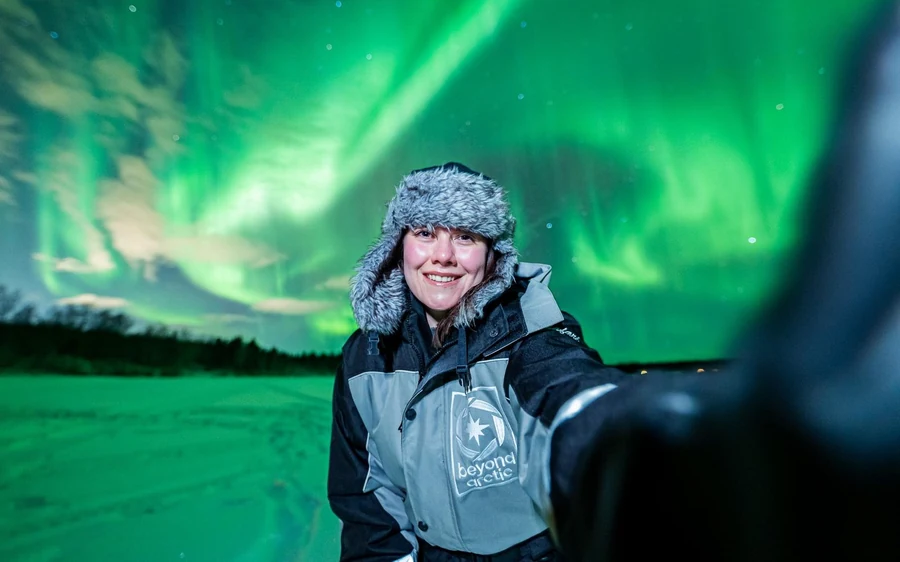
5h 30mLevi: Best & Original Northern Lights Hunting & photography
★ 4.3 · 174 reviews
- Five and a half hours, in Levi area
- Aurora Hunters
- Longest tour here
- Free cancellation
$166$30.18 / hour
Check availability→ Photography
Aurora photography is not about expensive equipment. It is about holding the camera perfectly still for several seconds in the dark, and everything else is detail. A modern phone in night mode, braced on something solid, produces images that would have needed a professional kit a decade ago; a good camera with the wrong settings and shaking hands produces nothing at all. This page covers the phone-versus-camera question honestly, the settings worth knowing before your fingers get cold, why a tripod is the piece of kit to bring, and which listing on this site actually names photography in what it sells — that is $166, and the title says so plainly. Nothing here can make the sky appear, and nothing here pretends to.
Quick answer
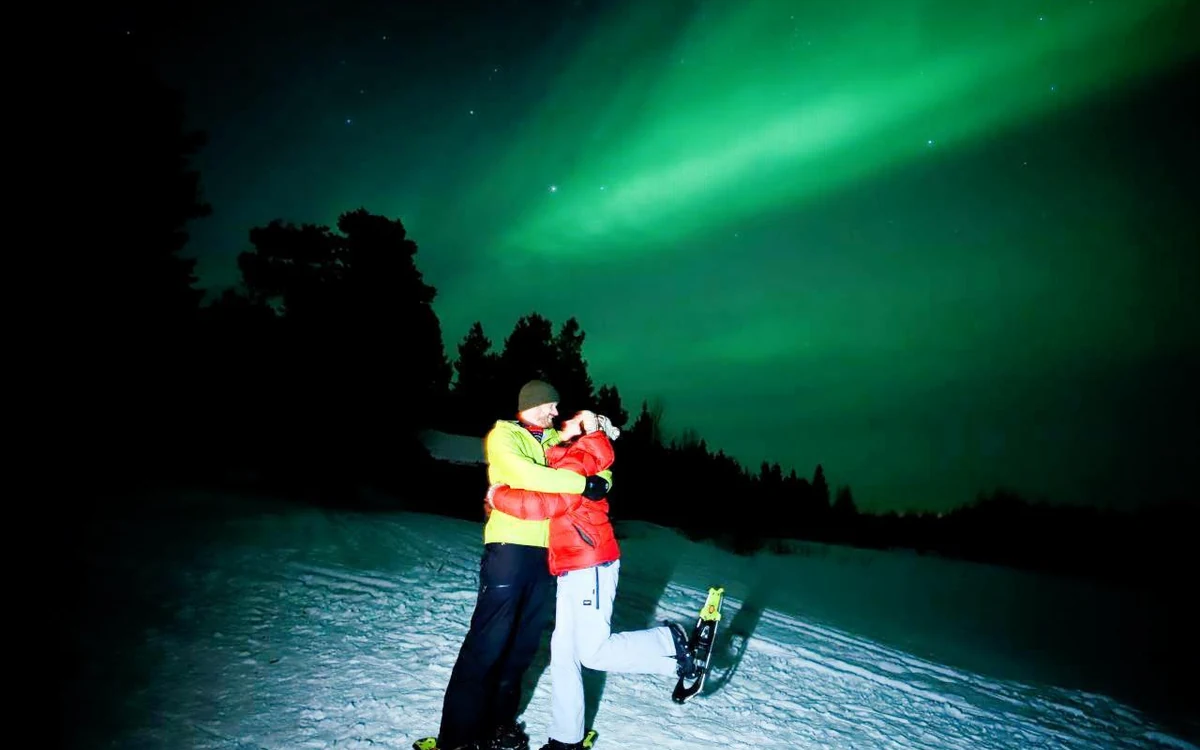
The short answer. Bring a tripod, or something you can wedge the camera onto, because a several-second exposure handheld is not a photograph. A recent phone in night mode, braced, will do better than most people expect. A camera does better still in manual mode with a wide lens, focus set manually on a bright star and a shutter of a few seconds. If photography is the point of your trip, $166 is the listing that names it, and $182 gives you a quiet spot to work in.
Phone or camera
Phones have got very good, and the reason is stacking. Night mode does not take one long exposure; it takes a burst of shorter ones and combines them, correcting for small movements as it goes. That is why a phone braced against a car roof can produce a recognisable, shareable image of a bright display. It is also why a phone handheld produces a green smear: the software can fix small wobbles, not a swaying pair of arms.
What a phone cannot do is hold detail in a faint sky. Where a display is dim or fast-moving, the small sensor runs out of light and the software fills the gap with smoothing. You get an image, but a soft one, and enlarging it disappoints. For a great many travellers that is a perfectly acceptable trade and the phone is the right answer.
A camera earns its place through the lens, not the body. A wide-angle lens with a large maximum aperture collects far more light in the same seconds, and a larger sensor holds the faint structure that makes an image look like the sky rather than a green wash. An older camera with a fast wide lens beats a newer one with a slow kit zoom, every time.
Autofocus does not work in the dark, and this is the thing that catches people out. There is nothing for it to lock onto. Switch to manual, aim at the brightest star you can find, magnify it on the screen and turn the focus ring until it is a small hard point rather than a soft blob. Do it at the start of the evening, with warm fingers and before anything interesting starts, and then leave it alone.
And whichever you bring, bring batteries. Cold drains them quickly. Two spares in an inside pocket, swapped as they fade, is the difference between shooting for three hours and shooting for forty minutes.
Every trip, current fare
Time matters more here than anywhere else on this site: setting up in the dark, focusing, framing and waiting all consume it. The longest listing is first, and the cost-per-hour column shows what those extra hours actually cost.
| Tour | Length | Price | What is included | Cost per hour | Rating |
|---|---|---|---|---|---|
| Levi: Best & Original Northern Lights Hunting & photographyLevi: Best & Original Northern Lights Hunting & photography | 5h 30m | $166 | A long guided hunt with photography help from the guide | $30.18 | 4.3 · 174 |
| Levi: Northern Lights in Peace and Privacy - by a Private LakeLevi: Northern Lights in Peace and Privacy - by a Private Lake | 3h 30m | $182 | A private evening by a lake, away from the village lights | $52.00 | 4.8 · 154 |
| Levi: Northern Lights Tour and Stargazing by TelescopeLevi: Northern Lights Tour and Stargazing by Telescope | 3 h | $125 | A guided evening with stargazing through a telescope | $41.67 | 4.6 · 194 |
| Levi: Northern Lights CampfireLevi: Northern Lights Campfire | 3 h | $105 | A campfire evening in the forest with the sky above it | $35.00 | 4.6 · 136 |
| Levi: Northern Lights Snowmobile SafariLevi: Northern Lights Snowmobile Safari | 3 h | $164 | A guided snowmobile safari run after dark | $54.67 | 4.5 · 629 |
| Levi: Northern Lights Tour by MinivanLevi: Northern Lights Tour by Minivan | 2h 30m | $102 | A guided minivan run out of the village in search of clear sky | $40.80 | 4.3 · 189 |
Settings and craft
Manual mode, and a shutter measured in seconds. The exact number depends on your lens and on how bright the display is: a fast-moving, bright sky needs a shorter exposure to keep its structure, and a faint one needs longer. Start somewhere in the range of a few seconds, look at the result, and adjust. There is no single correct setting, and anyone who gives you one has not stood out here.
Aperture as wide as the lens goes. This is the setting with no downside on a night sky. Wide open, always.
ISO higher than feels comfortable. A slightly noisy image of a real display beats a clean image of nothing. Modern sensors handle it far better than their reputation suggests, and noise reduction afterwards is easy.
Turn the screen brightness down. Two reasons: your night vision, which takes twenty minutes to build and two seconds to lose, and everyone else standing next to you. A bright screen in a dark field is the one piece of etiquette that gets people genuinely annoyed.
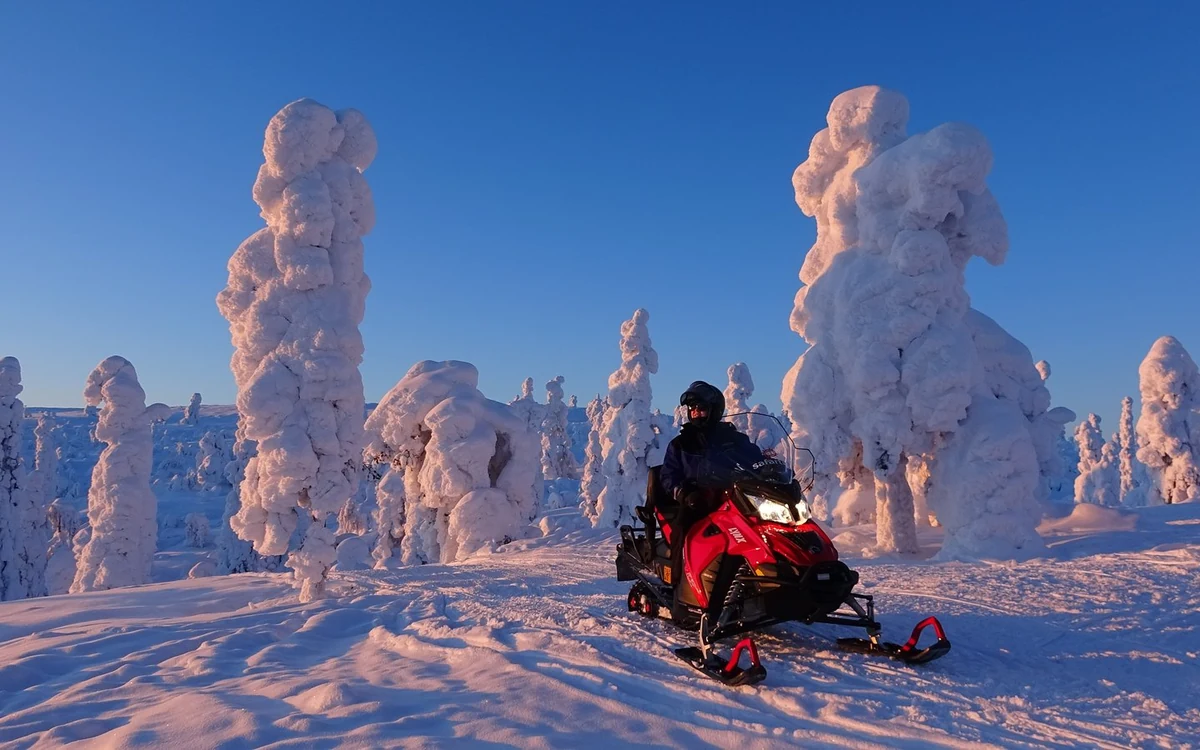
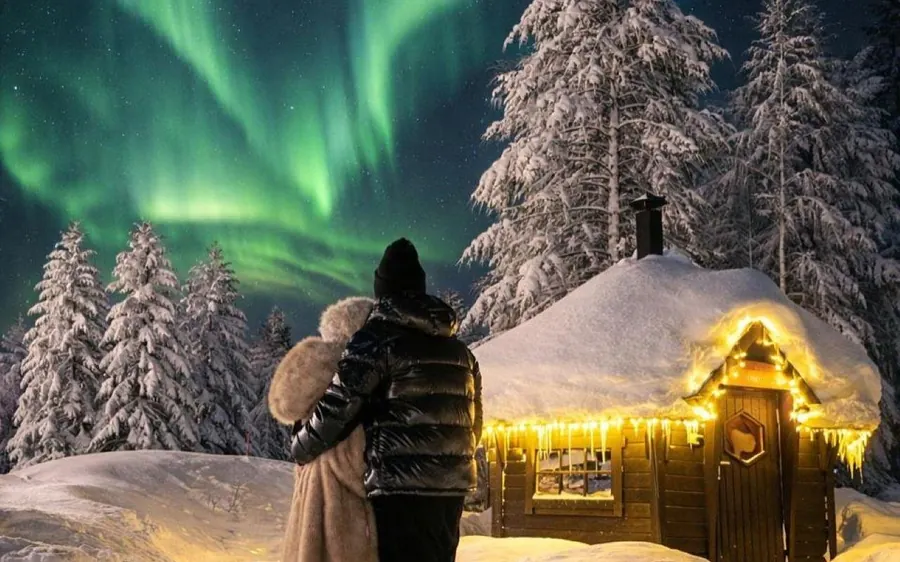
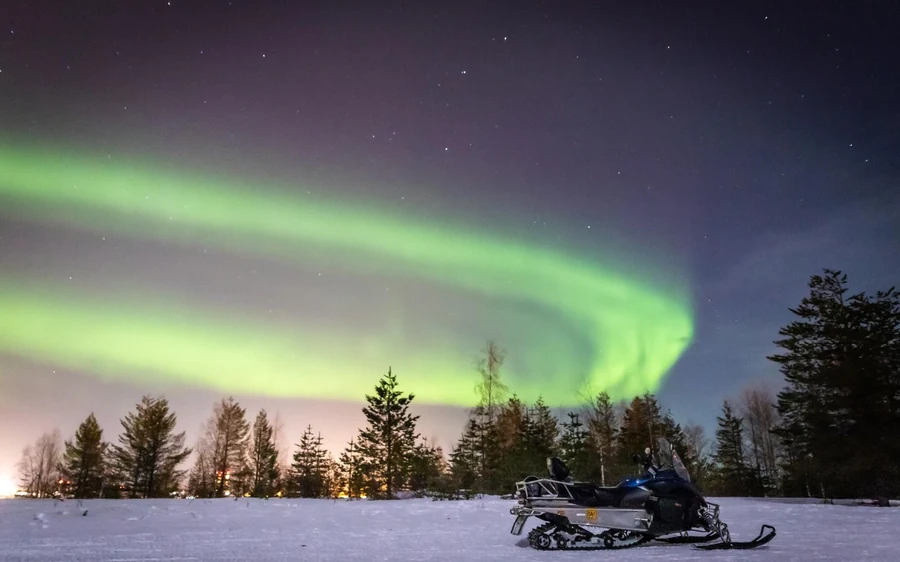
Find a foreground before you need it. The photographs people keep are not of the sky alone. They have a lake edge, a line of spruce, a cabin, a snowmobile, a figure standing still. Guides know where those are, which is one of the quieter reasons a guided evening produces better pictures than a walk out of the village.
And put the camera down for a while. A display that is worth photographing is worth watching, and screens are a poor way to experience anything overhead. The people who come back happiest shoot for twenty minutes and then stand still.
Before you leave the hotel
Every one of these is easy at room temperature and awkward in the dark with mittens on. Ten minutes before you leave saves the first half hour of the evening.
| What to sort | How | Why indoors | If you leave it |
|---|---|---|---|
| Focus methodmanual, at infinity | Learn where your lens focuses on a distant light | Autofocus has nothing to lock onto in a dark sky | A whole evening of soft frames you only notice at home |
| A stable supporttripod or beanbag | Pack it, and practise opening it once | Several-second exposures are impossible handheld | Green smears instead of photographs |
| Batteriescharged, plus spares | Charge everything, put spares in an inside pocket | Cold flattens batteries fast; a warm pocket revives them | A camera that stops at the best moment of the night |
| Screen brightnessand the red light mode | Turn it down before you go out | Night vision takes twenty minutes to build and seconds to lose | Your own night vision gone, and the group’s too |
| Whether your listing includes helpphotographer guide or not | Read the title and inclusions | $166 names photography; other listings do not | Expecting tuition on an evening that never promised it |
Book direct
Current fare, rating and review count from the listings, the longest window first. Every tour on this site has free cancellation, which is useful when you are choosing an evening around the sky rather than around a diary.
★ 4.3 · 174 reviews
★ 4.8 · 154 reviews
★ 4.6 · 194 reviews
★ 4.6 · 136 reviews
★ 4.3 · 189 reviews
★ 4.5 · 629 reviews
Worth knowing
All of it is about technique and about what the listings on this site actually name. None of it is a prediction about your night.
This is the whole message of the page. Stillness for several seconds is what makes the image; the body and lens only decide how good that image looks afterwards.
$166 has it in the title and runs five and a half hours, the longest window on this site. The other evenings are guided tours, not photography workshops, and we are not going to pretend otherwise.
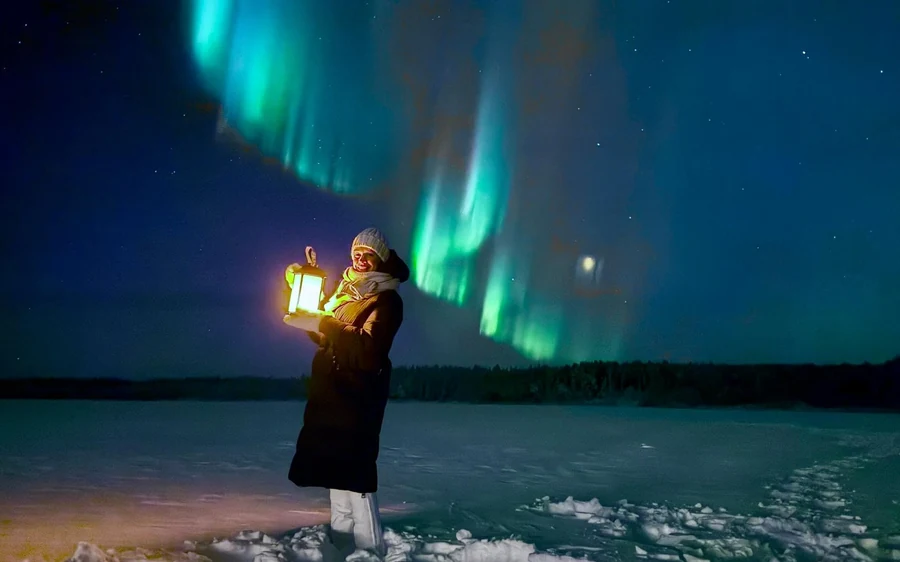
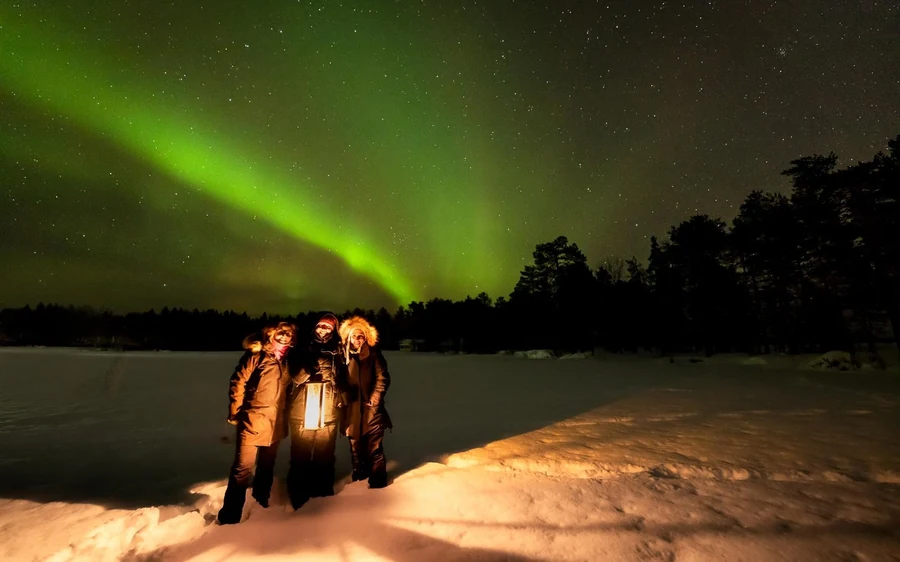
$182 means no queue at the good composition and no headtorch swinging into your frame. Three and a half hours by a lake, rated 4.8 across 154 reviews.
A long exposure accumulates light; your eye does not. A sky that looks pale grey to you can come out clearly green on the screen, which is a real phenomenon and not a trick of processing.
It reflects whatever light there is, so foregrounds that would be black anywhere else hold detail here. Moonlight on snow, which people treat as a problem, is often what makes the picture.
Set focus, aperture and screen brightness indoors. Anything that needs a menu is twice as hard in mittens, in the dark, with something happening overhead.
It applies across the board, which makes it reasonable to hold two evenings and keep the one with the better sky.
Across the season
The technique does not change through the season. The foreground does, and so does how long you can comfortably stand at a tripod.
Late Aug – Oct
Unfrozen lakes give mirror foregrounds you cannot get in midwinter, and the cold is mild enough for long sessions.
November
Fresh snow on spruce is the classic Lapland foreground, and the village is quiet.
December
The most hours of darkness in the year and the hardest on batteries. $105 gives you somewhere warm between frames.
Jan – early Apr
The strongest stretch for a long shoot, and $166 has the hours to make use of it.
The verdict
If photography is why you came, book $166. Five and a half hours with photography named in the listing title, rated 4.3 across 174 reviews — the longest window sold here and the only one that puts a camera in the description.
For a quiet spot to work in, book $182. Three and a half hours by a private lake with your group alone, rated 4.8 across 154 reviews.
For a second subject through the lens, book $125. Three hours with stargazing, rated 4.6 across 194 reviews.
For somewhere warm between frames, book $105. Three hours at a fire, rated 4.6 across 136 reviews.
And for machines in the foreground, book $164. Three hours on the fells, rated 4.5 across 629 reviews — check the listing for what you can carry while riding.
A camera is only as steady as the hands holding it, and cold hands are the main reason evening photographs come out blurred.
Dress for standing still→Common questions
A recent phone in night mode, braced firmly against something solid, does far better than most people expect on a bright display. It struggles on a faint one, where the software smooths away the detail.
Something that holds the camera completely still for several seconds: a tripod, a beanbag, or a solid surface. Exposure length is what makes the image, and handheld exposures of that length are not possible.
Manual mode, the widest aperture your lens has, manual focus set on a bright star, a high ISO and a shutter of a few seconds. The exact shutter depends on your lens and on how bright and fast-moving the sky is.
$166 names photography in the listing title and runs five and a half hours. The other evenings on this site are guided tours rather than photography sessions.
Cold batteries. Keep two spares in an inside pocket against your body and swap them as they fade; the cold ones usually come back once they have warmed up.
It is what turns a green rectangle into a photograph. Trees, a lake edge, a cabin, a machine or a person give the frame scale, and guides know where those are.
Go deeper
Every way to hunt the lights from Levi, compared.
Levi, FinlandWhere Levi sits, why it works, and what the season is.
By snowmobileRiding onto the fells away from the village lights.
By minivanThe cheapest way out of the village glow, and how it works.
Private toursYour own guide and car, and why that changes the odds.
PricesAll twenty-three listings line by line, and what moves the price.
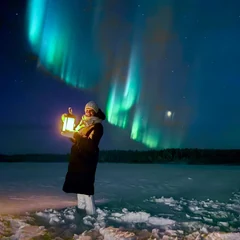
Levi: Northern Lights in Peace and Privacy - by a Private Lake
★ 4.8 · 154 reviews · Free cancellation 24 h